Brushing and Flossing
Maintaining a thorough brushing and flossing routine is one of the most vital steps you can take to keep your teeth and gums healthy during orthodontic care. Cleaning your teeth after each meal prevents food particles and plaque from settling around your brackets. If you need guidance selecting the best toothbrush, toothpaste, or flossing tools for your specific appliance, our clinical team is always here to recommend the right products for your needs.
Brushing with Braces
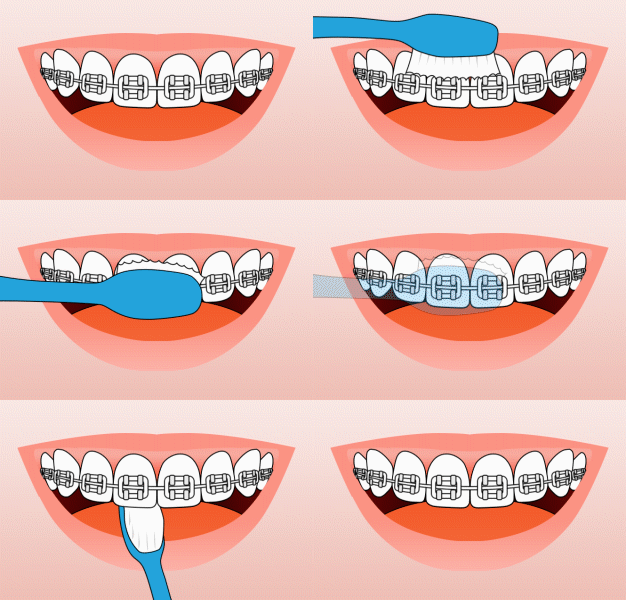
For optimal results, plan to brush for at least two minutes after every meal. Use a small-headed, soft-bristled toothbrush combined with a fluoride toothpaste, or opt for an electric toothbrush to help clean hard-to-reach areas more efficiently. Angle the brush head at a forty-five degree angle toward your gumline, sweeping in small, gentle circles across both the outer and inner surfaces of your teeth. Use light, back-and-forth strokes along the chewing surfaces and the backs of your front teeth, taking extra care to clean thoroughly around your brackets and wires.
Flossing with Braces
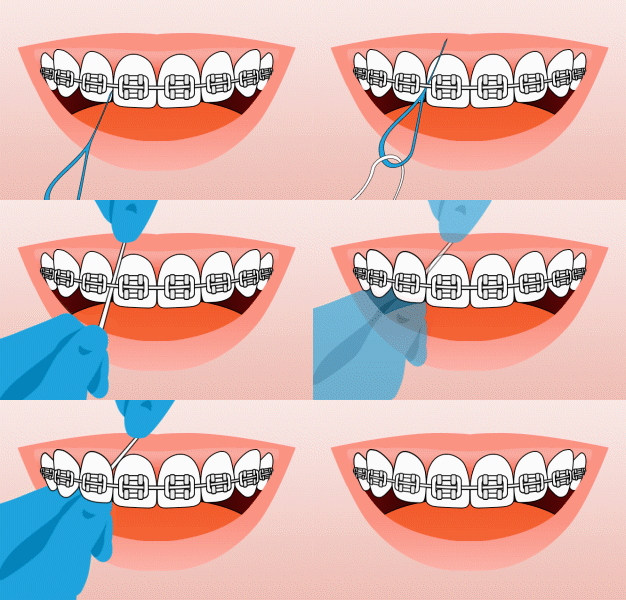
Flossing helps clean the spaces that a toothbrush cannot reach, helping to protect your gums and keep your treatment progressing smoothly. To floss with braces, guide a floss threader or specialized orthodontic floss behind the archwire. Wrap the ends securely around your index fingers, leaving a short, taut section between them. Gently ease the floss between your teeth in a soft, back-and-forth motion, sliding it carefully under the gumline to clear away plaque. Repeat this step for each tooth. If you find standard dental floss difficult to maneuver around your brackets, a water flosser can serve as an excellent supportive tool.